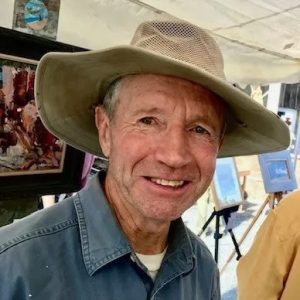
In the words of the late Charlie Shurcliff, our beloved plein air painter, teacher, and friend:
“Painting has little to do with techniques and everything to do with seeing. Or, more precisely, seeing what you see. Most of the fun comes at the start, while the canvas is still largely bare and full of promise. You are making major decision every few seconds, first in deciphering and decoding, then in simplifying and translating, both sides of your brain at full bore. Now you are seeing the kind of stuff you didn’t see earlier, properties rather than entities. If you look around you’ll find the world transfigured and paintable.
It is suddenly all about colors and relations and gestures, and all infused with importance and meaning—what it means, you can’t quite say, but capturing it assumes an urgency.
Before you know it, the painting starts to look pretty much complete, the acrylic paints on the palette have by now begun to harden in the sun, the sun has moved, the shadows changed, and you discover that you have been standing in one fixed position for far too long, perhaps an hour or even two, though any sense of time is long gone and so, too, any sense of self. There is no self: you find that you have somehow become what you paint, part and particle of all you see.”
En Plein Air Concord 2025
Exhibition Reception Date:
Exhibition Opening:
Exhibition End Date:
Exhibition Year:
Join Us For a Benefit Exhibition